
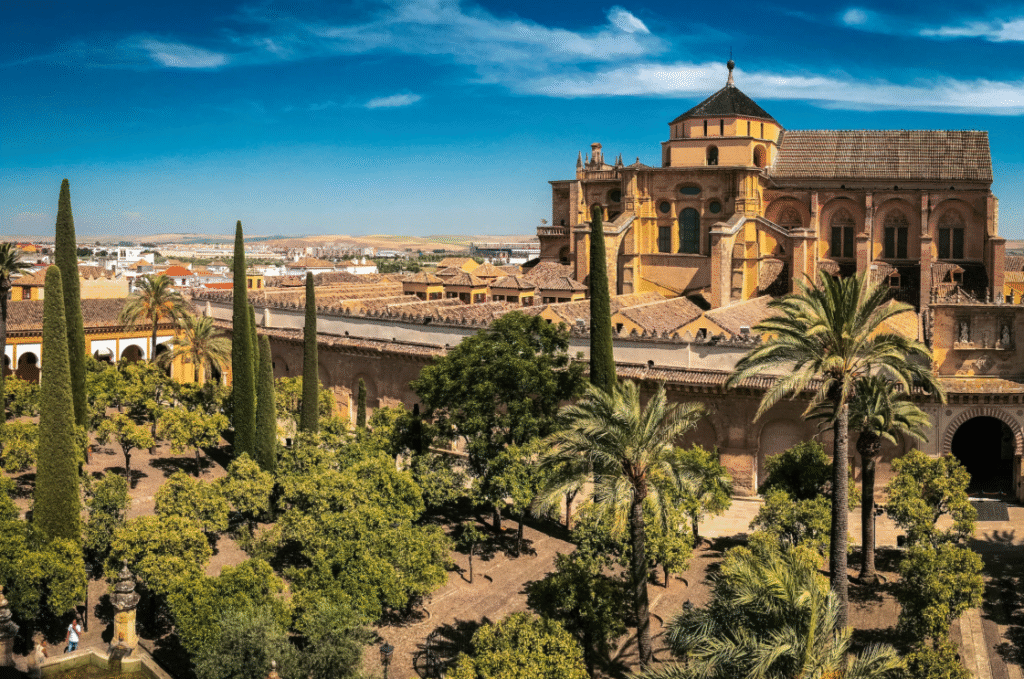
Spain’s Moorish heritage is one of the most fascinating aspects of its history, blending Islamic, Christian, and Jewish influences into a unique cultural identity. The Moors, who ruled much of Spain from the 8th to the 15th centuries, left behind an extraordinary architectural and artistic legacy, particularly in the region of Andalusia. The cities of Granada, Córdoba, and Seville are some of the best places to experience this rich heritage, each offering breathtaking palaces, grand mosques, and picturesque streets that tell the story of Spain’s Islamic past. A journey through these cities provides a deep understanding of the artistic, scientific, and cultural advancements that flourished under Moorish rule, making it an unforgettable experience for history and architecture enthusiasts.

Granada: The Jewel of Al-Andalus
Granada is one of Spain’s most captivating cities, largely due to its connection to Moorish history. The city was the last stronghold of Muslim rule in Spain before the Catholic Monarchs, Ferdinand and Isabella, reclaimed it in 1492. The grandeur of its Islamic past is still evident today, with the Alhambra standing as its most iconic monument.
The Alhambra, a UNESCO World Heritage Site, is an architectural masterpiece that exemplifies the refinement and sophistication of Moorish design. Built primarily during the Nasrid Dynasty, the complex is a stunning combination of intricate tilework, delicate stucco carvings, and serene courtyards. The Nasrid Palaces, with their exquisite archways and reflecting pools, transport visitors back to a time when the sultans of Granada ruled from within these walls. The Generalife gardens, once the summer retreat of the Nasrid rulers, offer breathtaking views of the surrounding mountains and the city below, making them a must-visit for anyone exploring Granada’s Moorish past.
Beyond the Alhambra, the Albaicín district preserves the atmosphere of medieval Moorish Granada. This labyrinth of narrow streets, whitewashed houses, and hidden courtyards offers an authentic glimpse into the city’s past. Strolling through its alleyways leads to the Mirador de San Nicolás, a viewpoint that provides one of the most spectacular vistas of the Alhambra, especially at sunset when the palace glows in golden hues against the Sierra Nevada mountains.
Granada’s Moorish heritage is also evident in the Alcaicería, the city’s old silk market, which today is a lively area filled with shops selling handcrafted ceramics, textiles, and spices. The presence of hammams, or Arab baths, such as Hammam Al Ándalus, allows visitors to experience traditional Moorish relaxation techniques in an ambiance that evokes the golden age of Al-Andalus.

Córdoba: The City of the Great Mosque
Córdoba was once the capital of the Islamic Caliphate in Spain and one of the most important cities in the medieval world. During its peak in the 10th century, Córdoba was a center of learning, attracting scholars, poets, and scientists from across the Islamic world. Today, the city remains one of the best places to witness the architectural and cultural achievements of Moorish Spain, with the Mezquita-Catedral as its crowning jewel.
The Mezquita-Catedral, or Great Mosque-Cathedral of Córdoba, is one of the most extraordinary buildings in the world. Originally built as a mosque in the 8th century, it was later converted into a cathedral after the Christian reconquest. The building’s interior is an awe-inspiring forest of red-and-white horseshoe arches supported by hundreds of columns, creating a mesmerizing visual effect. The mihrab, a richly decorated prayer niche, showcases some of the finest examples of Islamic art in Spain. Despite the later Christian additions, the mosque’s original structure remains a powerful testament to Córdoba’s Islamic past.
The city’s Jewish Quarter, or Judería, is another highlight of Córdoba’s cultural heritage. This well-preserved district features narrow, winding streets and traditional Andalusian courtyards filled with vibrant flowers. The Synagogue of Córdoba, dating back to the 14th century, is one of the few remaining medieval synagogues in Spain, reflecting the coexistence of Jewish, Muslim, and Christian communities in the city’s history.
Another fascinating remnant of Córdoba’s Moorish era is the Alcázar de los Reyes Cristianos, a fortress and palace that once served as a residence for Christian monarchs. While the Alcázar itself has undergone significant modifications over the centuries, its stunning gardens, filled with fountains, cypress trees, and orange groves, maintain a distinctly Moorish influence.
For a truly immersive experience, visitors can explore the ruins of Medina Azahara, an ancient palatial city located just outside Córdoba. Built by the Caliph Abd al-Rahman III in the 10th century, this grand complex was designed to showcase the power and splendor of the Umayyad dynasty. Although much of it lies in ruins today, the site remains an evocative reminder of Córdoba’s once-great empire.

Seville: The Legacy of the Almohads
Seville, the capital of Andalusia, is a city that seamlessly blends its Moorish and Christian heritage. During the 12th century, it served as a major stronghold of the Almohad Caliphate, and many of its most famous landmarks reflect this period of Islamic rule.
The Giralda, Seville’s iconic bell tower, was originally built as a minaret for the Great Mosque of Seville. It remains one of the finest examples of Almohad architecture in Spain, with its elegant proportions and intricate geometric designs. Visitors can climb the tower via a series of ramps, originally designed to allow the muezzin to ascend on horseback, and enjoy breathtaking panoramic views of the city.
At the base of the Giralda lies the Seville Cathedral, one of the largest Gothic cathedrals in the world. While primarily a Christian structure, the cathedral incorporates elements of the original mosque, including the Patio de los Naranjos, a courtyard filled with orange trees that once served as the mosque’s ablution area.
Another Moorish treasure in Seville is the Real Alcázar, a stunning palace complex that showcases a harmonious blend of Islamic, Mudejar, and Renaissance styles. Originally built as a fortress for Muslim rulers, the Alcázar was later expanded by Christian kings who retained its Moorish aesthetic. The intricate tilework, horseshoe arches, and lush gardens create an atmosphere reminiscent of the Alhambra, making the Alcázar one of Seville’s most enchanting attractions.
The Barrio de Santa Cruz, Seville’s historic Jewish Quarter, also retains a strong Moorish influence. Its maze-like streets, whitewashed buildings, and hidden patios evoke the charm of medieval Andalusia. Exploring this district offers a chance to discover hidden courtyards, charming plazas, and traditional tapas bars that reflect Seville’s rich cultural heritage.
