
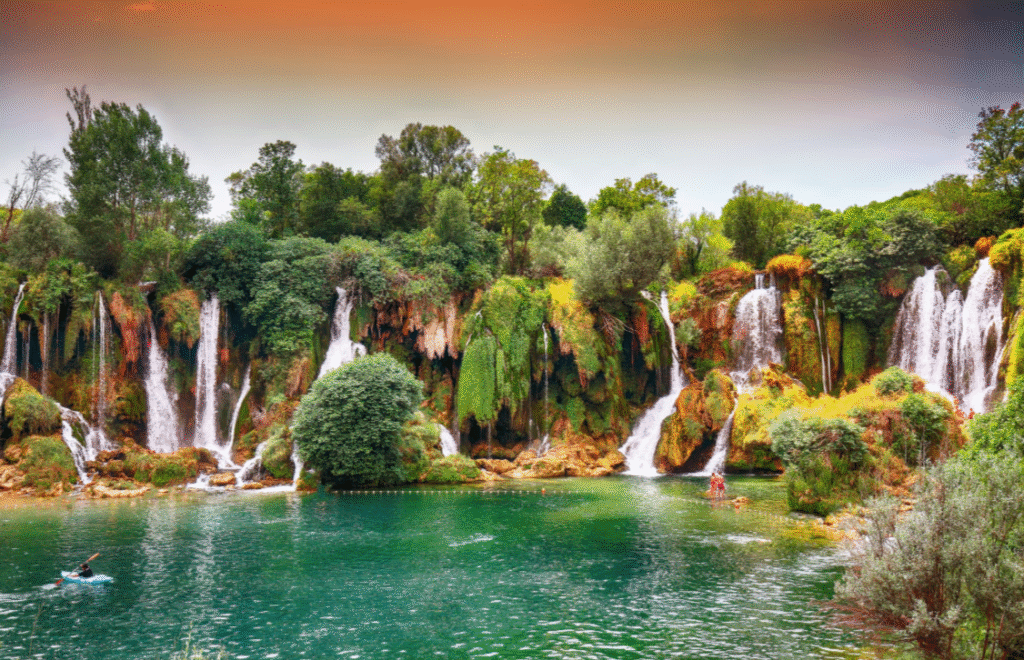
Bosnia and Herzegovina, a small yet ecologically diverse country in the Balkans, is home to breathtaking nature reserves and magnificent waterfalls. Its landscapes are shaped by rivers, mountains, and dense forests, creating a sanctuary for diverse flora and fauna. The natural beauty of Bosnia and Herzegovina remains one of its most captivating features, drawing nature enthusiasts, hikers, and ecotourists seeking unspoiled wilderness and spectacular cascades. The country’s unique geography, marked by karst formations, underground rivers, and lush valleys, provides a habitat for an astonishing variety of species, some of which are endemic to the region.

The Ecological Importance of Bosnia and Herzegovina’s Nature Reserves
Nature reserves in Bosnia and Herzegovina serve as vital refuges for biodiversity, ensuring the survival of rare and endangered species. These reserves play a crucial role in maintaining ecological balance, offering protection to diverse ecosystems that range from alpine meadows to dense primeval forests. The country’s national parks and protected areas have been established to conserve these invaluable landscapes while allowing visitors to experience their natural splendor responsibly.
The rugged terrain of the Dinaric Alps, which extends across much of the country, harbors dense forests that provide a habitat for brown bears, lynxes, wolves, and numerous bird species. Rivers and wetlands support amphibians, fish, and migratory birds, while the presence of endemic plants showcases the country’s botanical uniqueness. The conservation of these reserves is essential for maintaining the ecological integrity of Bosnia and Herzegovina and preserving its natural heritage for future generations.

Sutjeska National Park: The Heart of Bosnia and Herzegovina’s Wilderness
Sutjeska National Park, the oldest and largest national park in Bosnia and Herzegovina, is a prime example of the country’s rich natural landscape. It is home to the last remaining primeval forest in Europe, Perućica, a protected area with ancient trees, some reaching over 50 meters in height. The park’s diverse terrain includes deep valleys, rugged peaks, and fast-flowing rivers, making it a paradise for outdoor enthusiasts and wildlife lovers.
Mount Maglić, the highest peak in Bosnia and Herzegovina, towers over the park, offering a challenging ascent for experienced hikers. The mountain’s slopes are covered with dense coniferous and beech forests, providing shelter for many species of wildlife. Within the park, the Skakavac Waterfall, cascading down a sheer cliff, adds to the natural beauty of the region, creating a picturesque and serene setting.
Sutjeska National Park also holds historical significance, as it was the site of the famous Battle of Sutjeska during World War II. Today, visitors can explore both its natural and historical landmarks, making it a must-visit destination for those interested in both ecology and history.

Una National Park: A Haven of Waterfalls and Rapids
Una National Park, located in the northwestern part of the country, is named after the pristine Una River, which carves through the landscape, forming stunning waterfalls and vibrant turquoise pools. The park is renowned for its rich biodiversity, offering a haven for rare plant and animal species. The emerald-green waters of the Una River are home to endemic fish species, while the surrounding forests provide habitat for otters, deer, and various bird species.
One of the most spectacular attractions in Una National Park is the Strbacki Buk Waterfall, a powerful cascade that plunges into the river below. The waterfall, surrounded by lush vegetation, creates a mesmerizing scene, making it a favorite destination for photographers and nature lovers. In addition to Strbacki Buk, the Martin Brod Waterfall, with its series of smaller cascades and pools, enhances the park’s natural charm.
Visitors to Una National Park can enjoy a range of outdoor activities, including kayaking, rafting, and hiking. The park offers well-maintained trails that lead through its diverse landscapes, allowing adventurers to experience its beauty up close. The Una River’s clean and untouched waters make it one of the most ecologically significant rivers in the region, emphasizing the importance of conservation efforts in the park.
Kozara National Park: A Mountainous Retreat
Kozara National Park, situated in northern Bosnia and Herzegovina, is known for its rolling hills, dense forests, and breathtaking panoramic views. The park is an ideal destination for those seeking a peaceful retreat in nature, with an extensive network of hiking and cycling trails that wind through its diverse terrain. The park is also home to a variety of wildlife, including wild boars, foxes, and numerous bird species.
The park’s highest peak, Lisina, offers stunning views of the surrounding landscape, making it a popular spot for visitors. Kozara is also known for its cultural and historical significance, as it was the site of the Kozara Offensive during World War II. A memorial complex within the park commemorates the battle, blending history with nature.

Bliha Waterfall: A Hidden Gem
The Bliha Waterfall, located near the town of Sanski Most, is one of Bosnia and Herzegovina’s lesser-known yet equally enchanting natural wonders. The waterfall drops from a height of approximately 56 meters, creating a powerful and dramatic display. Surrounded by dense forest and rugged rock formations, the area around Bliha Waterfall provides a tranquil setting for visitors seeking solitude in nature.
The waterfall is easily accessible via a short hiking trail, making it an excellent destination for those looking for an easy yet rewarding outdoor excursion. The region around the waterfall is also rich in flora and fauna, adding to its ecological significance. Visitors often take the opportunity to explore the nearby caves and rock formations, further enhancing their experience in this hidden paradise.

Kravica Waterfall: The Pearl of Herzegovina
One of the most famous and visually striking waterfalls in Bosnia and Herzegovina is the Kravica Waterfall. Located near Ljubuški in the Herzegovina region, Kravica is often referred to as the “Mini Niagara” due to its wide, semi-circular shape and multiple cascades. The waterfall plunges into a large, emerald-green pool, creating a stunning natural swimming area.
Kravica Waterfall is a popular destination for both locals and tourists, particularly during the summer months when visitors can swim in its refreshing waters. The surrounding area, covered in lush vegetation, enhances the scenic beauty of the waterfall, making it an idyllic spot for relaxation and photography. Nearby, visitors can explore additional natural and cultural attractions, including the medieval town of Počitelj and the Vjetrenica Cave, adding depth to their journey through Herzegovina.

The Future of Conservation in Bosnia and Herzegovina
As Bosnia and Herzegovina continues to develop its ecotourism sector, the conservation of its nature reserves and waterfalls remains a priority. Sustainable tourism practices, community involvement, and governmental efforts play a crucial role in ensuring that these natural treasures remain preserved for future generations. Educational programs, reforestation initiatives, and strict environmental regulations help protect the country’s ecosystems while promoting responsible tourism.
Despite ongoing challenges such as deforestation, pollution, and climate change, the country’s commitment to environmental protection is evident in the continuous expansion of protected areas and the promotion of ecotourism. By fostering awareness and encouraging conservation efforts, Bosnia and Herzegovina can maintain its status as one of the most ecologically rich and naturally beautiful destinations in Europe.