
Latvia, a country of vast forests, unspoiled rivers, and scenic coastlines, offers some of the most diverse and breathtaking natural landscapes in Northern Europe. With over half of its territory covered in forests and thousands of lakes and wetlands scattered throughout, Latvia is a paradise for nature lovers and outdoor enthusiasts. The country’s national parks and outdoor retreats provide a perfect blend of biodiversity, cultural heritage, and adventure. From dense pine forests and pristine beaches to rolling hills and meandering rivers, Latvia’s protected areas offer something for everyone, whether they seek solitude, wildlife encounters, or exhilarating outdoor activities. Each park and nature reserve showcases the country’s commitment to conservation and sustainable tourism, allowing visitors to experience Latvia’s rich natural heritage in its purest form.

Gauja National Park: The Crown Jewel of Latvian Nature
Gauja National Park is the largest and oldest national park in Latvia, often referred to as the “Switzerland of Latvia” due to its rolling hills, deep valleys, and dramatic sandstone cliffs. Spanning over 90,000 hectares, the park is a haven for hikers, cyclists, and canoeists who wish to explore its picturesque landscapes and rich history.
The Gauja River, which snakes through the park, serves as the lifeline of this protected area. The riverbanks are lined with striking sandstone cliffs, caves, and rock formations, some of which date back millions of years. One of the most famous sites in the park is the Gutman’s Cave, the largest cave in the Baltics, with ancient inscriptions and legends associated with the medieval Livonian knights. Nearby, the town of Sigulda, known as the “adventure capital of Latvia,” offers breathtaking views from the medieval Turaida Castle, which sits atop a hill overlooking the Gauja River valley.
For outdoor enthusiasts, Gauja National Park provides extensive hiking and cycling trails that traverse dense pine forests, wildflower meadows, and scenic riverbanks. The park is also home to a variety of wildlife, including deer, lynx, and an impressive array of bird species. In the winter months, the park transforms into a wonderland for cross-country skiing and other snow-based activities.
For those interested in culture, the park contains several historical and archaeological sites, including ancient castle ruins and wooden churches. The Krimulda Manor and Ligatne Nature Trails allow visitors to experience the region’s historical charm while enjoying the serene natural surroundings. With its perfect mix of nature, adventure, and history, Gauja National Park is a must-visit destination for anyone exploring Latvia’s great outdoors.

Kemeri National Park: A Wetland Wonderland
Kemeri National Park, located along Latvia’s western coast, is a haven for nature lovers who appreciate wetlands, peat bogs, and diverse birdlife. Covering over 38,000 hectares, the park is renowned for its extensive bog landscapes, mineral springs, and untouched forests. It provides an opportunity to explore one of the most unique ecosystems in the Baltics while enjoying a peaceful retreat into nature.
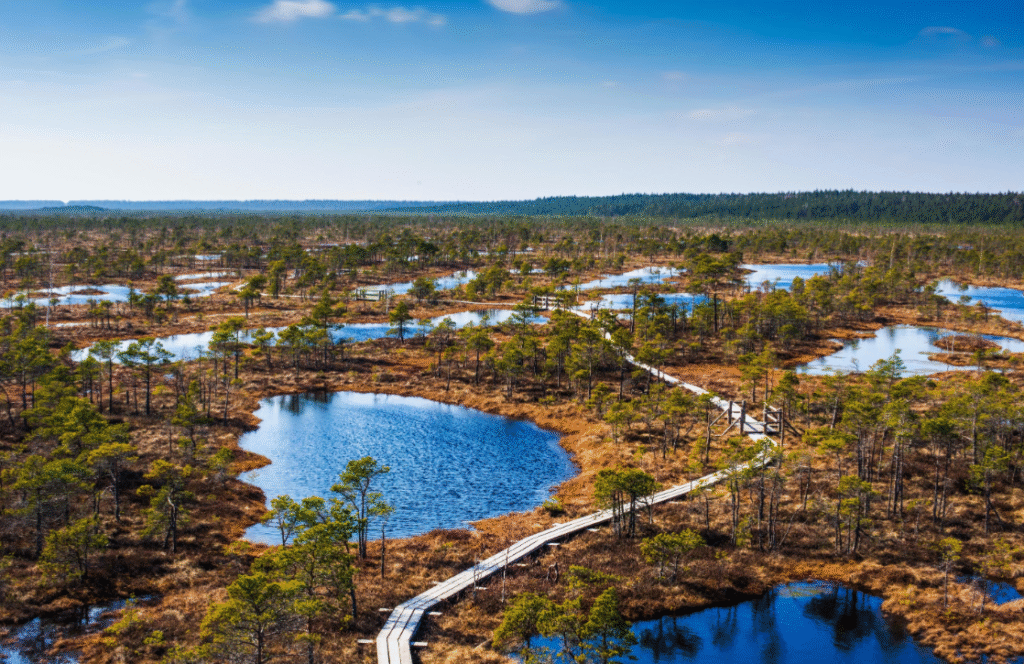
The Great Kemeri Bog Boardwalk is the park’s most iconic attraction, offering visitors a chance to walk across a wooden pathway that meanders through an otherworldly landscape of peat bogs, small lakes, and moss-covered hummocks. The boardwalk is especially popular at sunrise and sunset when the mist rises from the wetlands, creating an ethereal atmosphere. Birdwatchers will find Kemeri to be a paradise, as the park is home to rare species such as the black stork, white-tailed eagle, and cranes that nest in the quiet marshlands.
Aside from its wetlands, Kemeri National Park also features lush pine forests and coastal meadows that provide excellent opportunities for hiking and wildlife spotting. The park is known for its mineral springs and healing mud, which were historically used for therapeutic treatments in nearby spa towns. Jurmala, Latvia’s famous seaside resort, is located just outside the park and offers a perfect blend of relaxation and cultural experiences after a day of exploring nature.
The park’s lakes and rivers provide excellent conditions for kayaking and fishing, while the sandy dunes along the coastline offer a scenic backdrop for long walks. Whether visitors seek solitude, birdwatching, or a peaceful connection with nature, Kemeri National Park delivers an unforgettable experience in Latvia’s diverse natural landscape.
Slītere National Park: A Coastal and Cultural Gem
Slītere National Park, located in the northwestern part of Latvia, is one of the most remote and least explored natural areas in the country. It is famous for its coastal cliffs, dense forests, and rich cultural heritage linked to the indigenous Livonian people. This park, which covers 16,000 hectares, offers a combination of dramatic landscapes and historical significance, making it an intriguing destination for adventure seekers and history lovers alike.
The Slītere Blue Hills, a series of ancient coastal dunes and cliffs, provide spectacular panoramic views of the Baltic Sea and the surrounding forests. The Cape Kolka area, where the Baltic Sea and the Gulf of Riga meet, is a breathtakingly wild and windswept place that offers dramatic seascapes and excellent birdwatching opportunities. During the spring and autumn migration seasons, thousands of birds pass through this region, making it one of the best locations for ornithologists in Latvia.
The park also preserves the cultural heritage of the Livonian people, one of the oldest ethnic groups in Latvia. Small fishing villages such as Kosrags and Mazirbe provide a glimpse into the traditional way of life, with wooden houses, fishing boats, and local crafts reflecting centuries-old traditions. The Livonian cultural center in Mazirbe offers insights into the history, language, and customs of this unique Baltic community.
For nature lovers, the park’s diverse habitats include marshes, old-growth forests, and pristine beaches that stretch for miles without any development. Hiking and cycling trails allow visitors to explore the landscape at their own pace, while guided tours provide deeper insights into the region’s ecology and history. The peaceful and untouched nature of Slītere National Park makes it an ideal retreat for those looking to experience Latvia’s wilder side away from the crowds.

A Journey Through Latvia’s Natural Treasures
Latvia’s national parks and outdoor retreats offer a diverse range of experiences, from the rolling hills and historic castles of Gauja to the ethereal wetlands of Kemeri and the coastal cliffs of Slītere. These protected areas not only preserve the country’s rich biodiversity but also provide opportunities for adventure, relaxation, and cultural immersion. Whether trekking through deep forests, paddling along serene rivers, or exploring traditional fishing villages, visitors to Latvia’s natural landscapes will find themselves surrounded by breathtaking scenery and warm hospitality.
For those seeking to reconnect with nature, Latvia’s national parks provide the perfect escape. With well-marked trails, stunning vistas, and an abundance of wildlife, these outdoor retreats invite travelers to experience the untouched beauty of the Baltic region. Whether visiting in summer for endless green landscapes or in winter for snow-covered tranquility, Latvia’s natural wonders remain one of the country’s greatest treasures.
